
Madlener House
4 West Burton Place
Chicago, Illinois 60610
Telephone: 312.787.4071
info@grahamfoundation.org
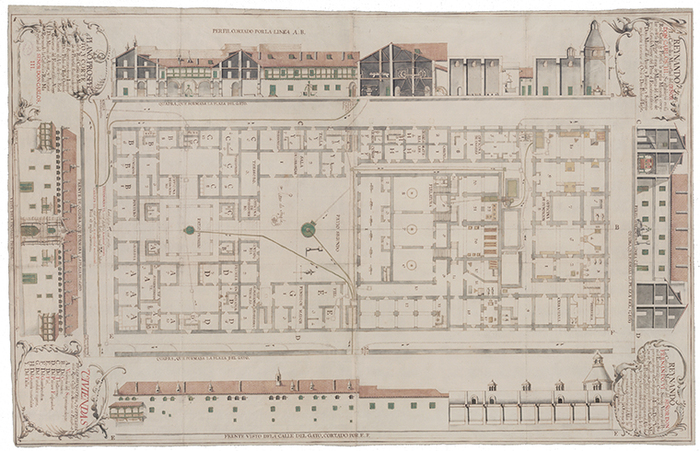
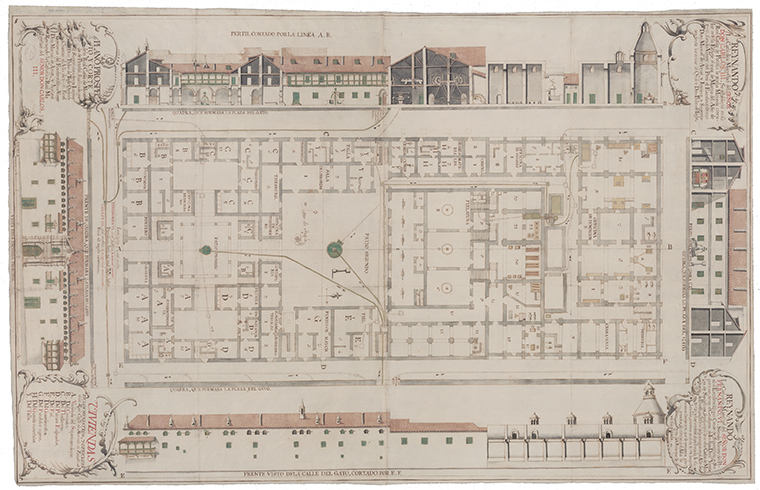
Pedro de Tagle, “Plan and sections of the Royal Mint in Potosí, as completed in 1772” Potosí, 1773. Ink on paper. Courtesy MINISTERIO DE CULTURA, Archivo General de Indias (Sevilla, España) MP-BUENOS_AIRES, 276
Lucia Galaretto, Columbia University—“The Art of Reform: Architecture, Finance, and the Politics of Valuation in the Spanish Colonial Andes, 1740–1790”
Lucia Galaretto
Columbia University, Graduate School of Architecture, Planning and Preservation
Research Citation
“The Art of Reform: Architecture, Finance, and the Politics of Valuation in the Spanish Colonial Andes, 1740–1790” explores the paradoxical role of Indigenous forms in the architecture and decorative arts of the late Spanish Empire, focusing on the new institutional programs, political allegories, and appraisal regulations that served as the linchpins of the Bourbon Reforms.
Foivos Geralis
Princeton University, School of Architecture, Joint PhD in Architecture and Interdisciplinary Humanities
Research Citation
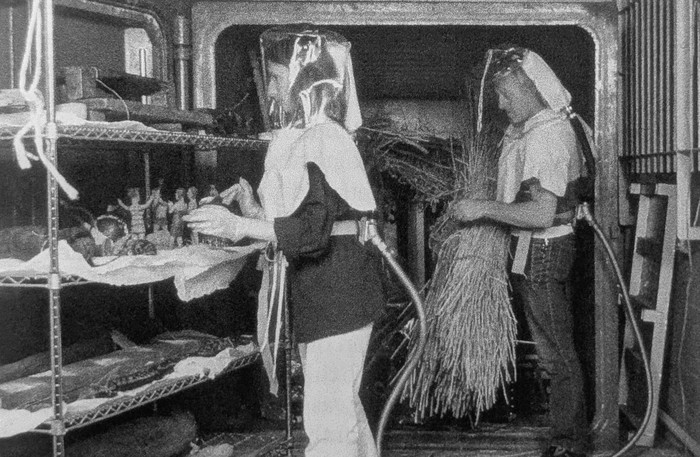
“Climatocracy: How Museums Took Control of the ‘World’” examines how, from the 1960s onward, the architecture of the encyclopedic museum became a climatic and epistemic instrument of global governance, as environmental control, preventive conservation, and the geopolitics of culture converged to produce new regimes of institutional reason and cultural stewardship.
Piergianna Mazzocca
Cornell University, College of Architecture, Art, and Planning, Department of Architecture, History of Architecture and Urban Development Program
Research Citation
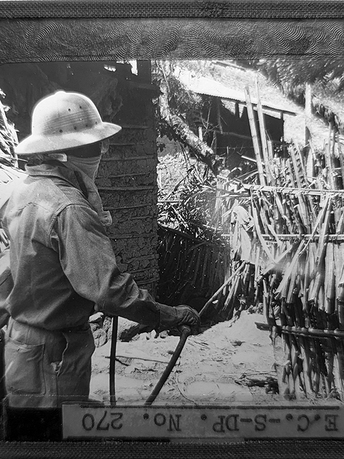
“Architectures of Extraction: Disease Eradication and the Sanitary Integration of the Americas” traces the architectural history of disease eradication and resource extraction in Venezuela during the first half of the twentieth century by arguing that architectural techniques and spatial management shaped the doctrine of disease eradication while aligning its goals with those of capitalist extractivism and colonial relations of race and labor across the American hemisphere.
Cecilia Resende Santos
Columbia University, Department of Art History and Archaeology
Research Citation
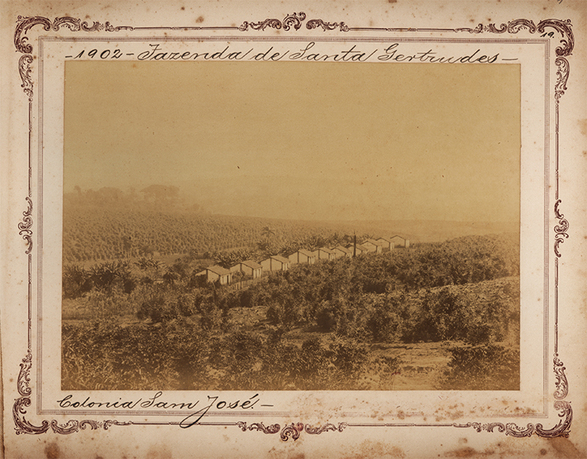
“Building the Coffee Cycle: Infrastructure, Architecture, and Landscapes in Brazil, c. 1880–1930” examines how the Brazilian built environment shaped, and was shaped by, the expansion of coffee cultivation around the turn of the twentieth century, by studying the design of plantations, workers’ settlements, research institutes, warehouses, and exchanges.
Copyright © 2008–2026 Graham Foundation. All rights reserved.